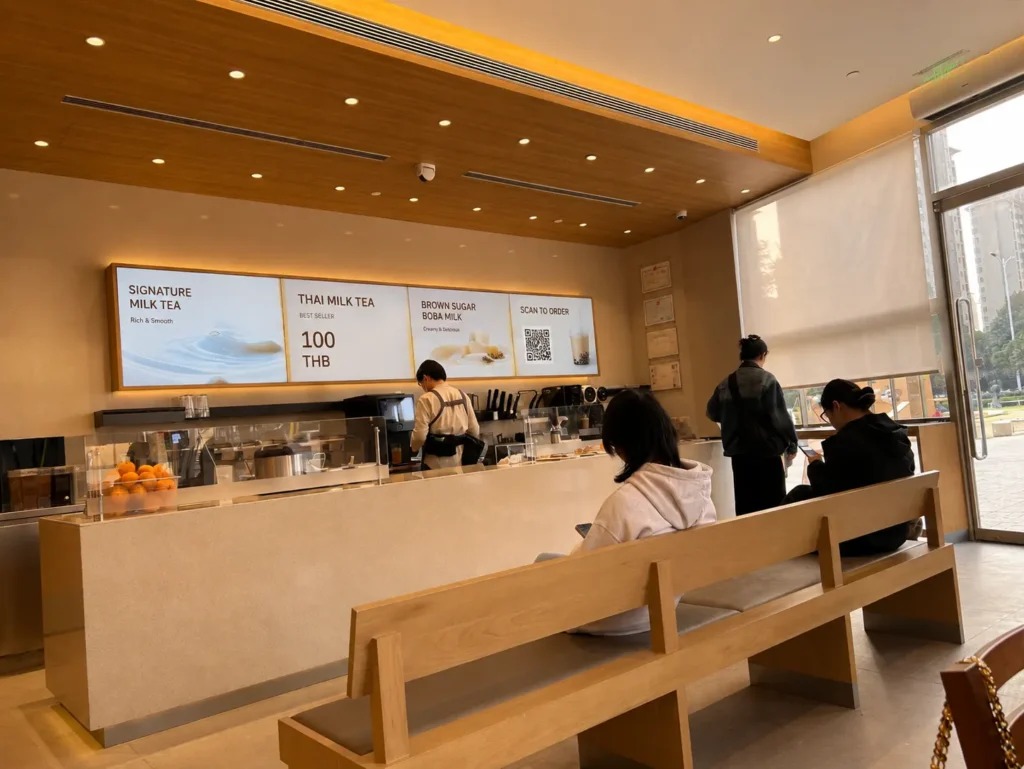
Layout Design, Custom Manufacturing & Equipment Integration

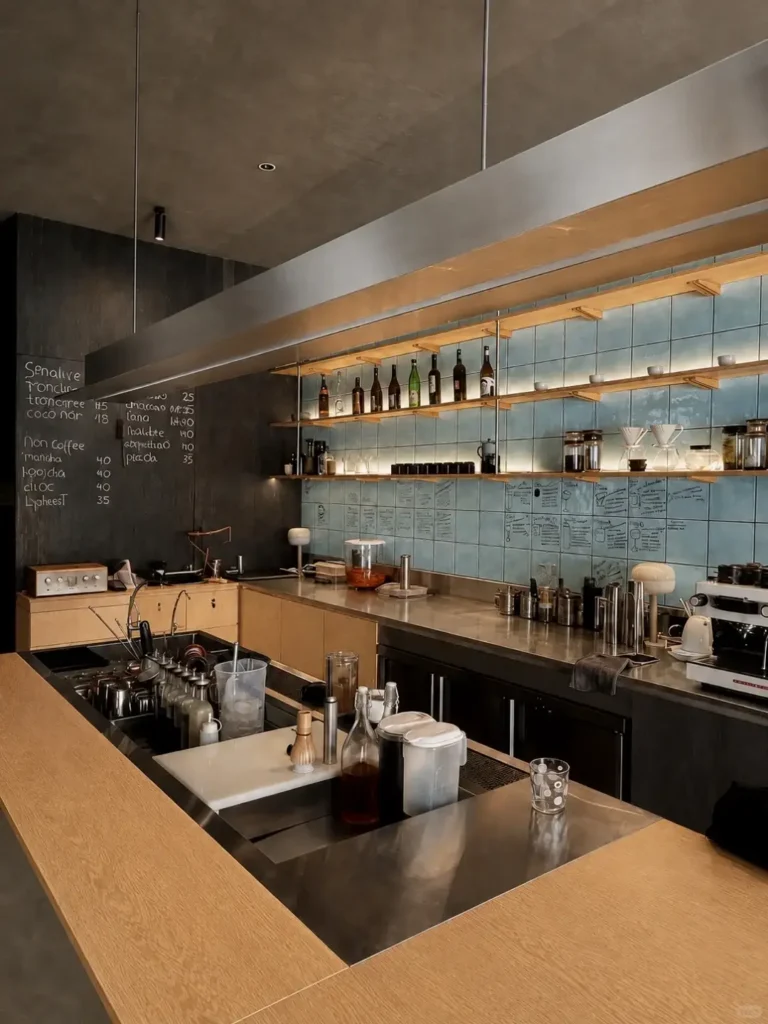
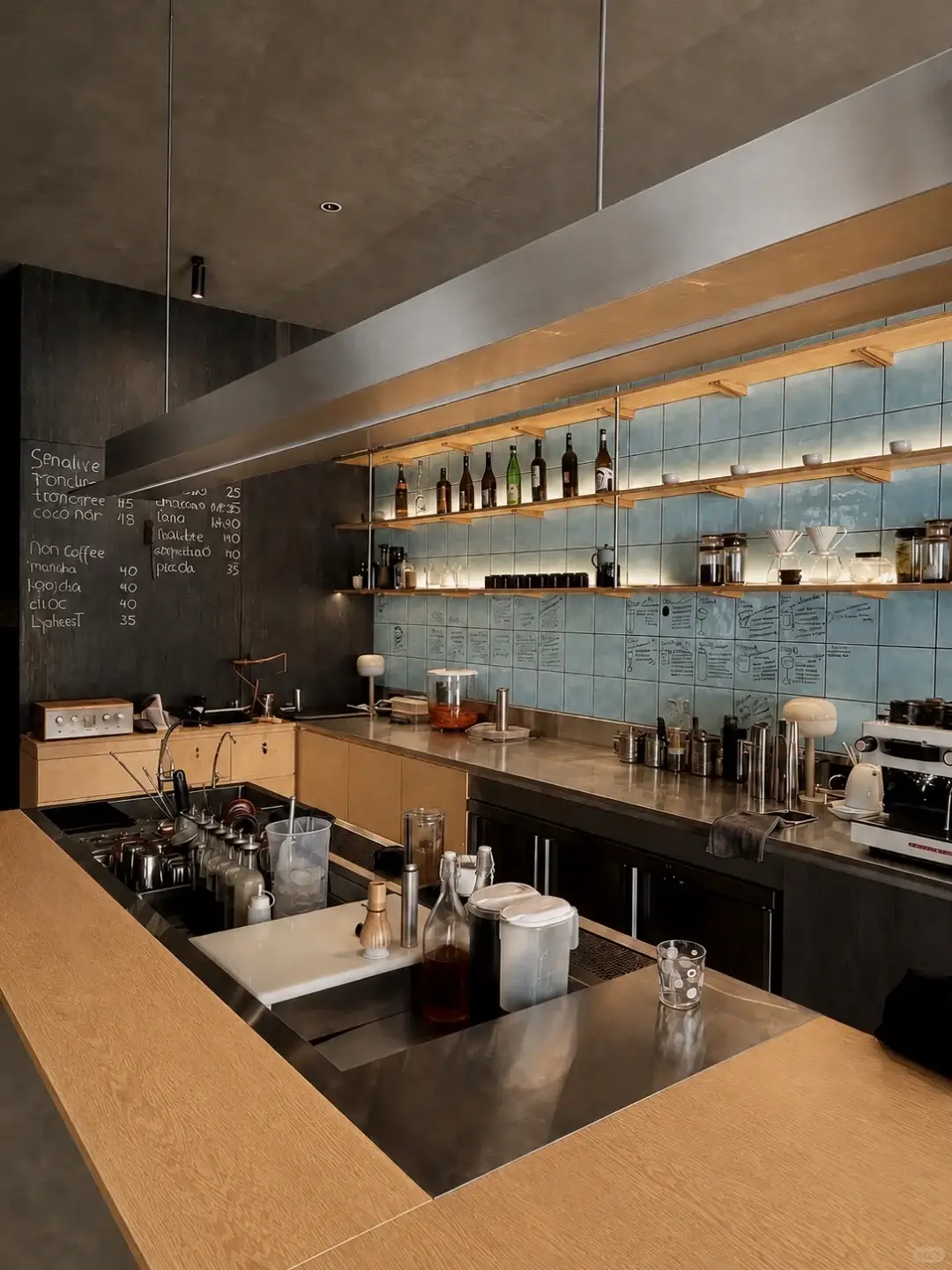
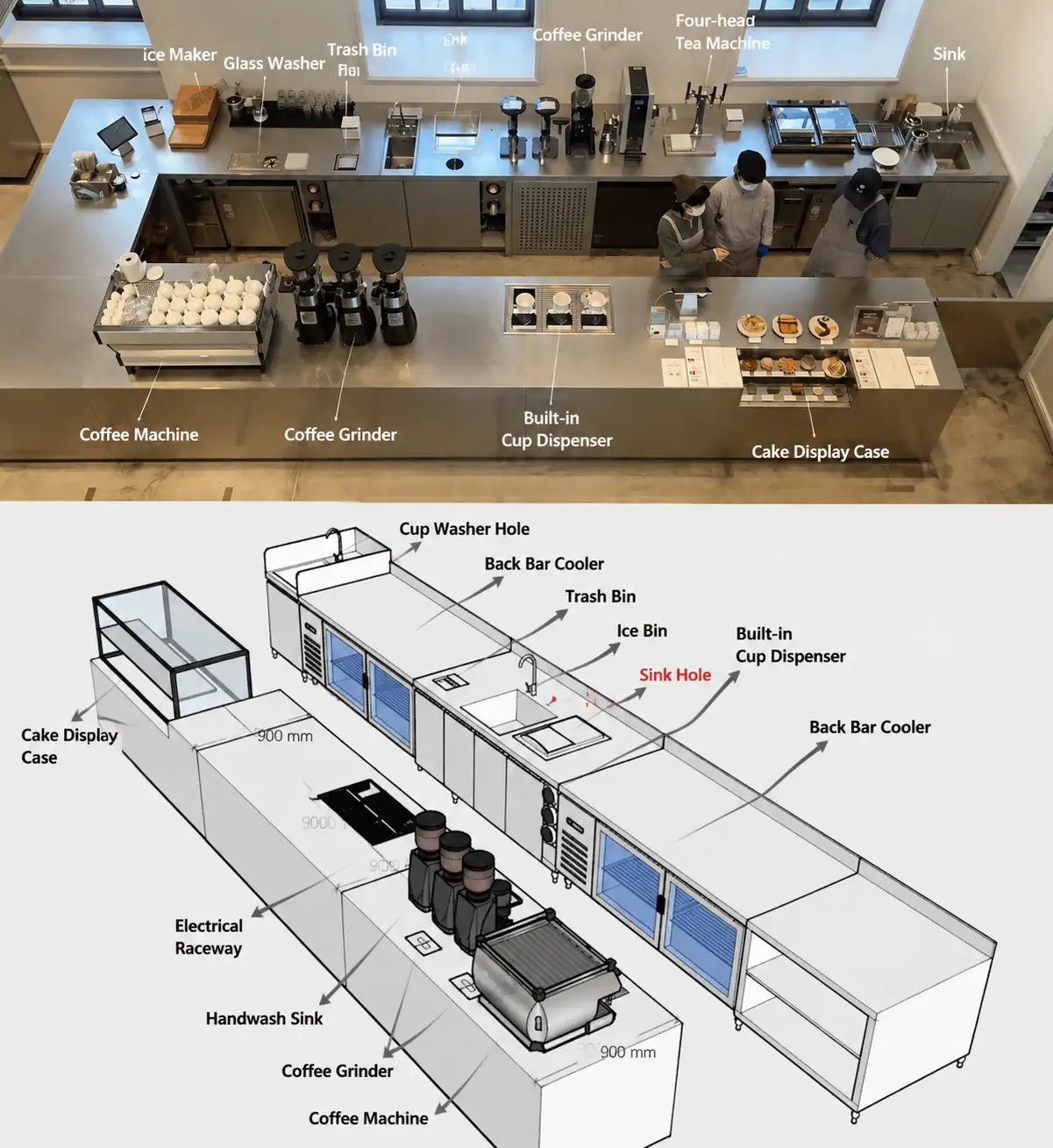
Project Objective: Create an executable, easy-to-clean, and scalable workflow linking refrigeration, ice making, cleaning, preparation, and beverage handoff.This case concerns an urban café in Kuala Lumpur, Malaysia. The project is located where office and residential customer groups converge and is planned to serve dine-in customers, takeaway coffee, iced beverages, desserts, and a limited selection of light meals. The client’s concern is not simply placing equipment behind the counter, but enabling the limited space to support continuous beverage production during the morning peak, routine restocking, food safety, and end-of-day cleaning, while retaining a consistent equipment logic for future store replication.
At the start of the design process, we organized the requirements around the menu and peak-period workflow rather than beginning with any single machine. The client needs stable storage for fresh milk, plant-based milk, opened syrups, desserts, and light-meal ingredients; a continuous supply of hygienic, consistently formed ice in a hot and humid operating environment; and a setup that allows employees with different skill levels to locate ingredients quickly, complete cleaning tasks, and prepare beverages using the same steps. The equipment must also match the store’s electrical supply, water supply and drainage, heat dissipation, door openings, floor load capacity, and final bar dimensions.
The core system includes coffee-making equipment, grinders, an ice maker, undercounter refrigerators or freezers, upright storage refrigerators, a beverage bar worktable, stainless steel sinks, water filtration and drainage components, storage cabinets, and, depending on the menu, a refrigerated display case, glasswasher, or light-food equipment. The width, water inlet, drainage, power requirements, and operating clearances of the coffee machine and grinders must be incorporated into the bar drawings in advance, preventing a situation in which each item is individually suitable but the combined setup cannot be installed or maintained.
At the start of the design process, we determined that refrigeration and ice making are often the first bottlenecks exposed as customer volume grows. Purchased ice makes it difficult to maintain consistent control over hygiene, supply, and ice type, while insufficient ice-making capacity directly affects iced-beverage sales. Inadequate refrigerated storage can also lead to frequent door opening, mixed storage of ingredients, and restocking disruptions. Therefore, this scenario treats the ice maker, undercounter refrigeration, and reserve freezing as infrastructure, with capacity calculated from estimated daily ice use, continuous peak-period withdrawal, ambient temperature, and ice-storage requirements rather than by comparing rated equipment output alone.
| Equipment Category | Recommended Equipment | Main Function | Key Procurement Confirmation Points |
| Ice Making | Commercial ice maker and ice storage unit | Supports iced coffee, sparkling drinks, and continuous beverage production during peak periods | Daily output, storage capacity, ice type, water quality, heat dissipation, and drainage |
| Near-Line Refrigeration | Undercounter refrigerator | Keeps milk, prepared ingredients, and opened products within the operator’s reach | Usable capacity, temperature zone, door or drawer configuration, and door-opening direction |
| Reserve Freezing | Undercounter or upright freezer | Stores frozen semi-finished products and safety stock | Temperature range, defrosting, categorized storage, and ease of cleaning |
| Beverage Bar Operations | Beverage bar worktable | Supports preparation, ice addition, drink mixing, sealing, and beverage handoff | Counter height, cutouts, splashback, equipment integration, and maintenance clearance |
| Washing | Stainless steel sink and drainboard | Washing cups, washing tools, handwashing, or separated cleaning tasks | Number of bowls, faucets, water supply and drainage, clean/soiled separation, and splash protection |
| Storage | Stainless steel storage cabinet | Stores cups, tools, dry goods, and cleaning supplies | Load capacity, shelves, door type, floor clearance, and cleaning dead spots |
| Display | Refrigerated display case (optional, based on the menu) | Displays desserts and ready-to-sell foods | Display temperature, anti-fog glass, loading direction, and lighting |
This project uses the undercounter refrigerator as “near-line inventory,” holding only the milk and prepared ingredients used frequently during one shift. Upright or back-of-house refrigeration serves as “reserve inventory,” reducing disruption to the operating line during bar restocking, while the display case is used only for ready-to-sell products visible to customers. This arrangement shortens ingredient-retrieval distances and reduces the risk of placing every ingredient in the same refrigerator. The ice maker is located near the iced-beverage station, while retaining access to the water supply, drainage, ventilation, and cleaning passage.
The coffee machine is not the only focus of this project. This coffee shop case shows that how easy the equipment is to learn, whether it remains stable during busy periods, and whether its cleaning steps are clear will directly affect new-employee onboarding and beverage consistency. Procurement should therefore evaluate the operating interface, simultaneous production capability, daily cleaning, and training materials rather than focusing only on extraction parameters.
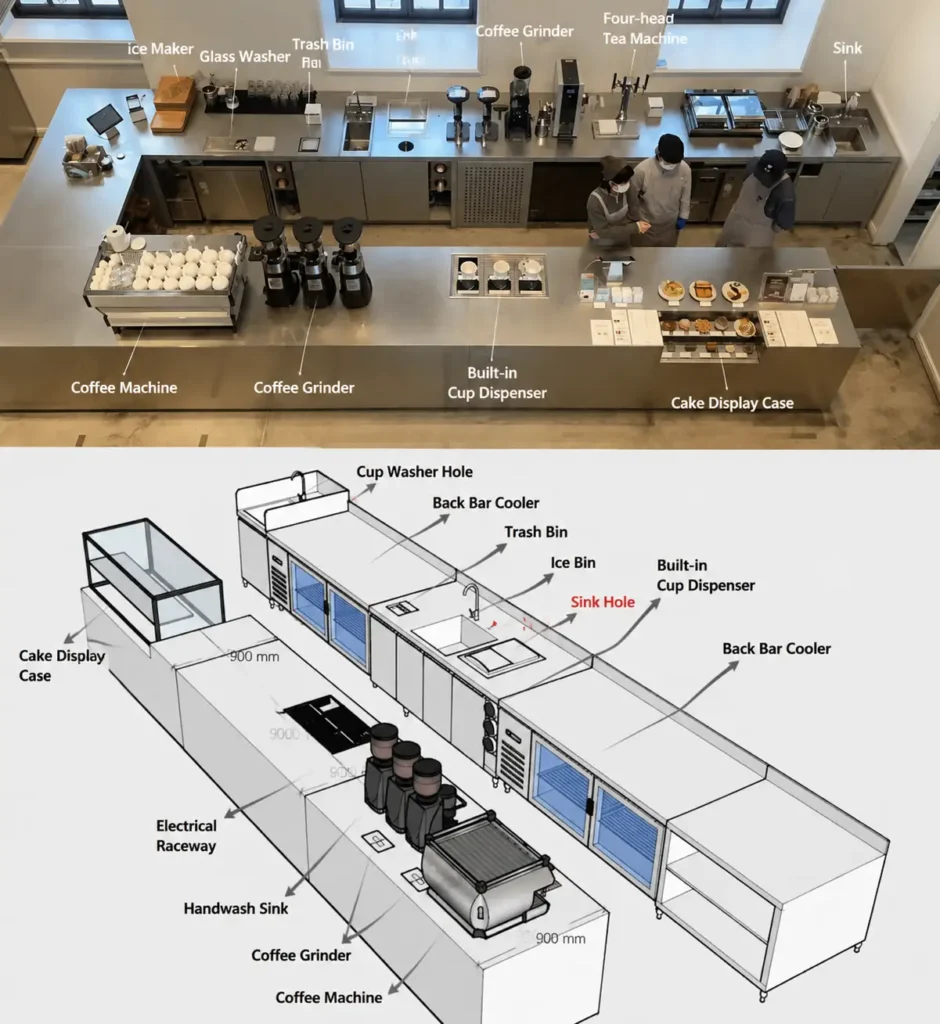
We organize the main workflow into six consecutive stages: order taking and cup preparation, coffee extraction, milk and ingredients, ice addition and drink mixing, sealing or lidding, and handoff. Frequently used ingredients are placed below or just behind the corresponding station, preventing staff from crossing the aisle to retrieve milk, ice, or tools. The cashier and handoff area should be separated from the return flow to the washing area, reducing conflicts among customer movement, delivery riders, and the return of used cups.
The sink area should clearly distinguish tool washing, cup washing, and handwashing, with the number and purpose of sink bowls determined according to local hygiene requirements. Waste, wastewater, and soiled utensils should not pass through the finished-beverage handoff area. Back-of-house restocking should preferably enter the refrigeration and storage area from the side or rear so that it does not occupy the front operating line during peak business hours. Where space is limited, conflicts should still be reduced through door-opening direction, drawer configuration, and scheduled restocking.
The layout drawing should show more than equipment outlines. It should also indicate door swing, drawer pull-out distance, heat-dissipation clearance, filter replacement access, condenser cleaning access, drainage slope, and standing space for service personnel. Before ordering, every item must be cross-checked against the final floor plan, elevations, and MEP point drawings. Any dimensional change must also be reflected in the bar cutouts and adjacent cabinets.
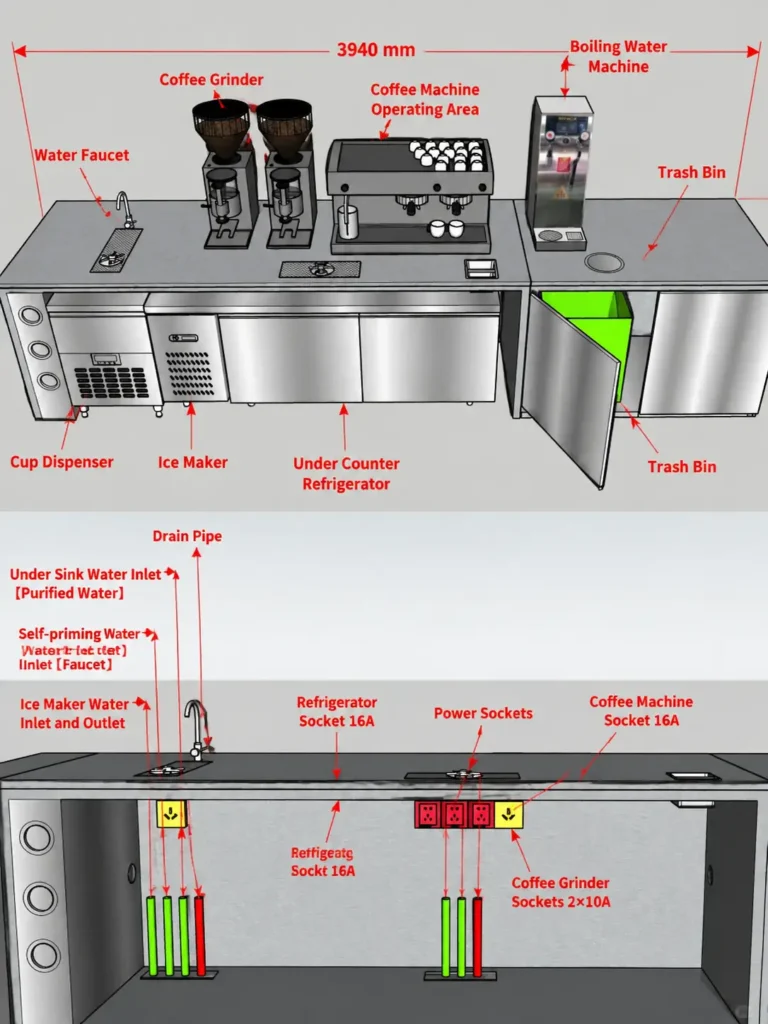
The ice maker should be sized according to the proportion of iced beverages on the menu, ice used per drink, operating hours, peak concentration, ice-storage turnover, and water-temperature conditions. Refrigeration equipment should be sized according to ingredient categories, delivery frequency, near-line inventory for one shift, and reserve inventory. Allow a reasonable margin, but do not replace accurate calculation with oversized equipment, because overconfiguration will occupy bar space and increase heat dissipation and maintenance requirements.
Procurement documents should confirm each item’s overall dimensions, usable capacity, temperature range, voltage, frequency, phase, plug or wiring method, rated power, water-supply pressure, drainage method, refrigerant, heat-dissipation direction, noise requirements, and packed dimensions. For stainless steel equipment, the material grade, sheet thickness, surface finish, welding, and edge treatment should be confirmed according to food-contact conditions, cleaning frequency, and the operating environment.
Quotations from different suppliers must be based on the same specification sheet; otherwise, a lower price may simply reflect a configuration difference. Before ordering, request approval drawings, samples, or evidence for key materials where appropriate. During production, request photographs, test records, or videos according to the level of risk. Before shipment, verify nameplates, quantities, appearance, functions, spare parts, shipping marks, and protective packaging. For certification, warranty, and after-sales scope, rely only on valid documents provided by the supplier for the specific model rather than general brand claims.
Operators care about ingredient-retrieval distance, counter height, cleaning steps, and how the station feels during peak periods. Maintenance personnel care about service access, parts availability, and fault isolation. Incorporating both perspectives into equipment evaluation before ordering is often more economical than modifying the store after opening. Stores with frequent staff turnover should also prioritize equipment with intuitive interfaces, standardizable processes, and clear training materials, while documenting startup, cleaning, shutdown, and exception handling in the store SOP.
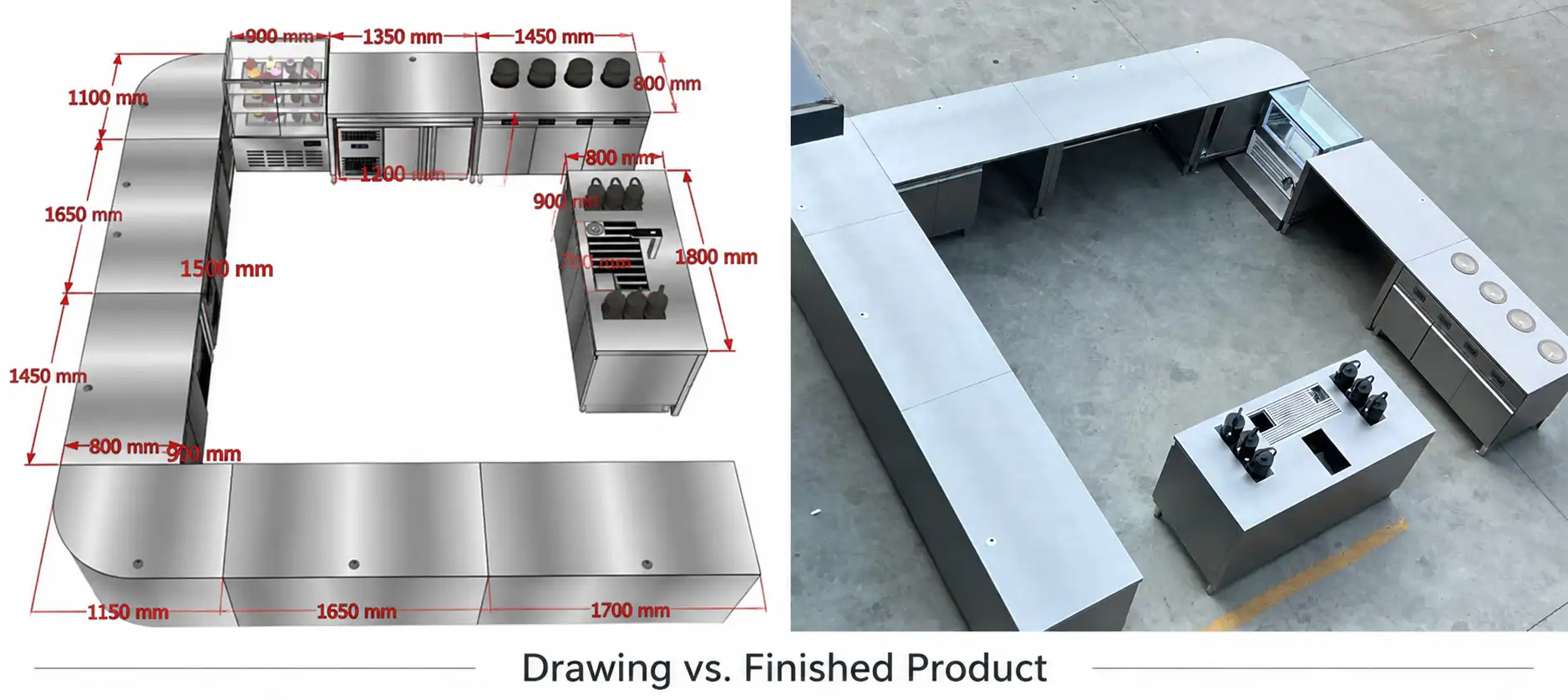
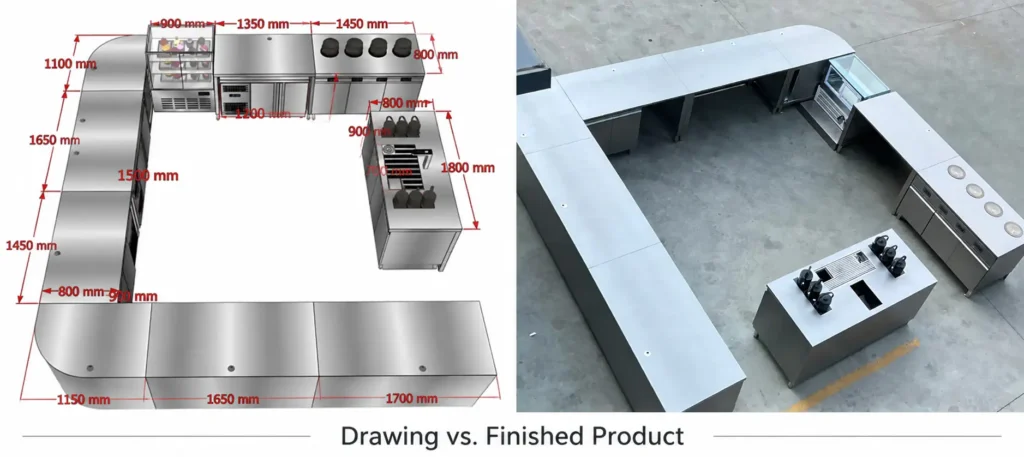
Based on the approved floor plan, menu, and equipment list, PURUI evaluates dimensional combinations and interface compatibility for the beverage bar, worktables, sinks, storage cabinets, and related refrigeration equipment. Common coordination items include countertop length and height, splashbacks, sink-bowl positions, faucet holes, cup-well or ingredient-bin cutouts, cabinet-door or drawer direction, shelf configuration, equipment recesses, ventilation openings, casters or adjustable feet, and integration with the coffee machine, grinders, water filter, and ice maker.
Proceed in the sequence of requirement sheet – plan and elevation approval – equipment specification approval – pre-production approval – pre-shipment verification. Electrical parameters, plug or wiring method, language labels, protective packaging, shipping marks, and spare-parts requirements should be defined before the order is placed. Customization feasibility, minimum-order requirements, lead time, cost, certification applicability, and after-sales content are subject to PURUI’s written response for the specific model and project.
Please provide the country and city where the store is located, floor-plan dimensions, menu, expected operating hours, average and peak daily cup volume, proportion of iced beverages, dimensions of the existing or planned coffee machine, water supply and drainage, electrical conditions, opening date, and delivery information. The more complete the information, the easier it is to reduce later changes to dimensions and interfaces.
Both must be considered. Daily output reflects total demand, while peak consumption and storage capacity determine whether the store will run out of ice during short periods. Incoming-water temperature, ambient temperature, ice type, cleaning downtime, and a safety margin must also be considered. Final sizing should be based on the actual menu and operating forecast rather than nominal daily output alone.
Undercounter refrigeration is suitable for milk and prepared ingredients used frequently during one shift, while upright or back-of-house refrigeration is suitable for reserve inventory. Dividing the two functions reduces staff movement and frequent restocking and also helps manage temperature zones and shelf life by ingredient category.
The project owner, electrician, or MEP consultant should confirm the store’s on-site voltage, frequency, phase, socket or wiring method, and circuit capacity. These conditions must then be checked item by item against each machine’s nameplate and technical documents and confirmed in writing in the order.
Check the equipment’s permitted ambient conditions, heat-dissipation method, installation clearances, condenser-cleaning access, drainage, condensation control, and ventilation. Actual performance is also affected by door-opening frequency, loading method, and maintenance, so avoid enclosing the heat-dissipation area against a wall and do not exceed the recommended loading range.
The drawings can first be adapted to the confirmed equipment dimensions, door-opening direction, interfaces, and service access. However, production feasibility, cutout method, structural strength, cost, and lead time must be confirmed in writing by PURUI for the specific project. The drawings must be rechecked whenever an equipment model changes.
Verify the model, quantity, nameplate, dimensions, appearance, key functions, accessories and spare parts, documentation, packaging reinforcement, shipping marks, and packing list. Custom stainless steel items should also be checked for hole positions, welding, edges, door and drawer direction, and surface finish. The inspection method and acceptance criteria should be agreed before the order is placed.
Before procurement, confirm with PURUI the installation responsibility, commissioning method, warranty start date, coverage, wear parts and spare-parts list, remote-support conditions, and availability of local service for the specific model. These provisions may vary by product and region and are subject to the contract, warranty documents, and written confirmation by both parties.
Get a Coffee Shop Equipment Solution
After preparing the store floor plan, menu, estimated cup volume, proportion of iced beverages, equipment list, electrical conditions, and water supply and drainage information, submit the project requirements through /contact-us/. PURUI can then help organize the equipment combination, bar interfaces, and technical items requiring further confirmation. The final solution, price, lead time, and service scope are subject to the written quotation and contract.
Contact PURUI Today
Looking for reliable commercial refrigeration equipment or customized solutions?
Whether you need standard products or small-scale OEM projects, PURUI can help you build the right refrigeration solution for your business
Products
Choose PURUI Customized Commercial Bar Counters to Support Your Business Growth
Projects
Explore PURUI Completed Projects and equipment solutions
Contact Us
Contact PURUI for Project Consultation

Share your store layout, equipment requirements, or project ideas with the PURUI team. We provide customized solutions including beverage bars, refrigeration systems, stainless steel equipment, and complete commercial kitchen solutions.