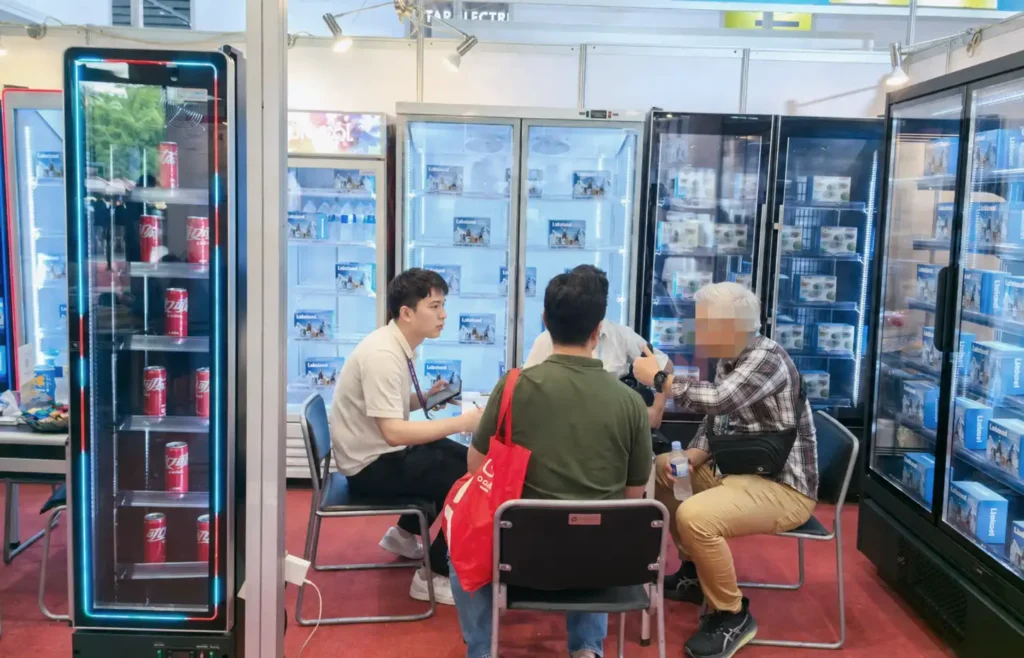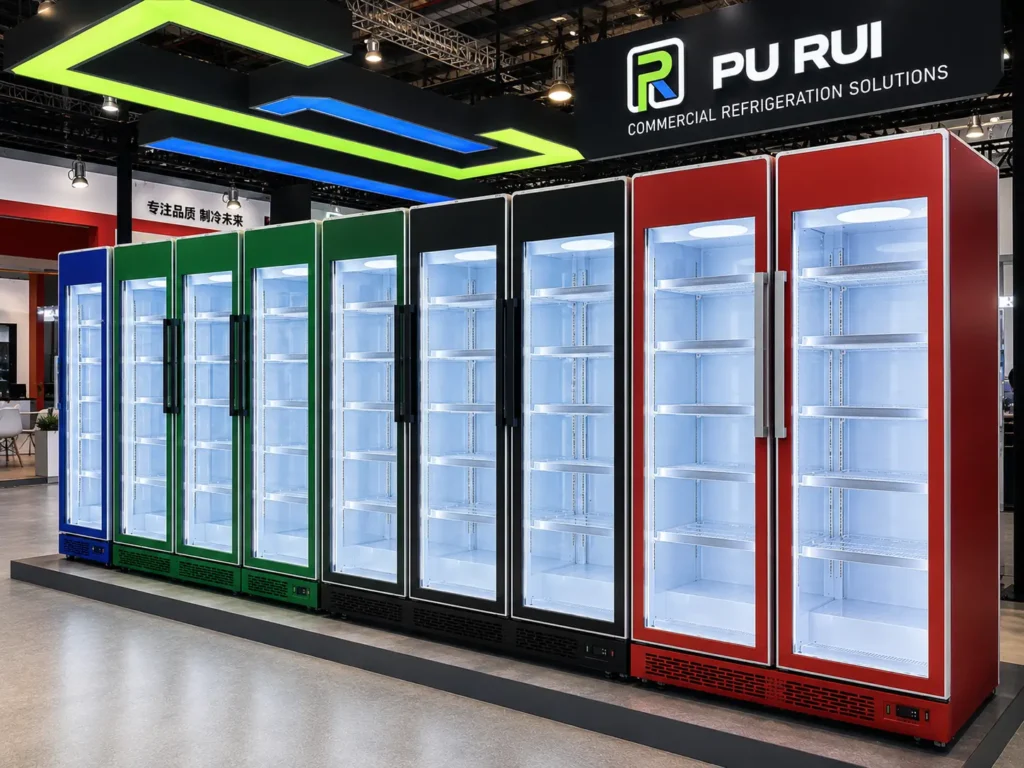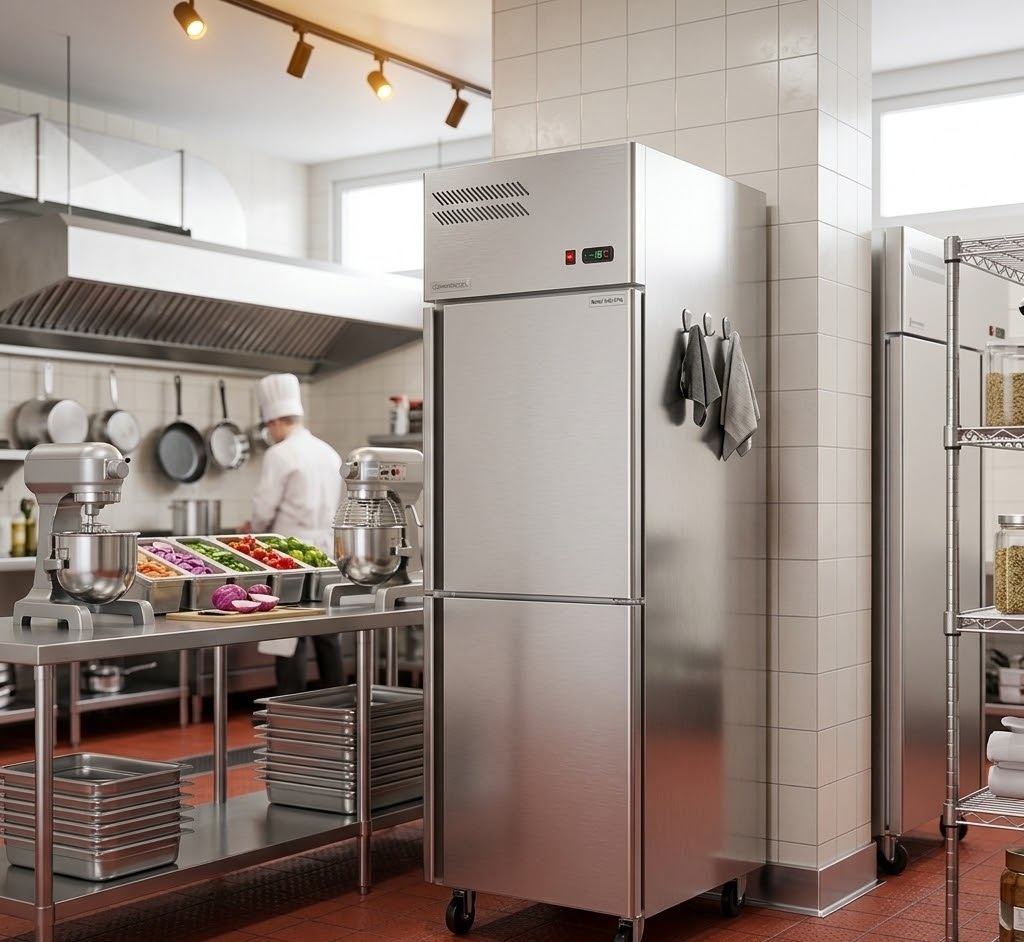
A reliable bubble tea shop equipment plan starts with the menu and peak orders. Size each station, ice production, and refrigeration first; then finalize workflow, utilities, drainage, local approvals, and a model-specific acceptance checklist.
An executable equipment plan is not a shopping list of popular machines. The menu, order pattern, food-safety process, staff movement, and site conditions must work as one system. This guide provides a complete method from requirements through commissioning for new shops, remodels, chain prototypes, and full-store equipment purchases.
In what order should bubble tea shop equipment be planned?
Use this sequence: menu and cup sizes; sales and peak demand; stations and cycle times; ice and refrigeration; bar layout; utilities; approvals and documents; quotation and acceptance. Reversing that sequence often produces a bar where every machine fits physically but the system still queues, overheats, drains poorly, or cannot be approved.
- Define the menu: brewed tea, milk tea, fruit tea, smoothies, coffee, hot drinks, tapioca pearls, and other cooked toppings.
- Define packaging and service: cup sizes, rim diameter, film or lid, dine-in or takeaway, front-counter pickup, and delivery-driver pickup.
- Record the busiest 15-minute order mix. A new shop can forecast from a comparable concept and location, then replace the forecast with measured data after opening.
- Break every drink into brewing, cooling, ingredient pickup, ice, dosing, blending or shaking, sealing, and handoff steps.
- Choose models only after checking drawings, certified performance, and the utilities available at the actual site.
The menu should determine the equipment, not the other way around. A shop serving brewed teas and classic milk teas will usually emphasize hot water, brewing, holding, ice, refrigeration, dosing, and sealing. Adding frozen drinks introduces blender capacity, noise control, rinse access, and higher ice demand. Adding coffee, baking, or hot food may change electrical load, ventilation, fire review, and the scope of the food permit.
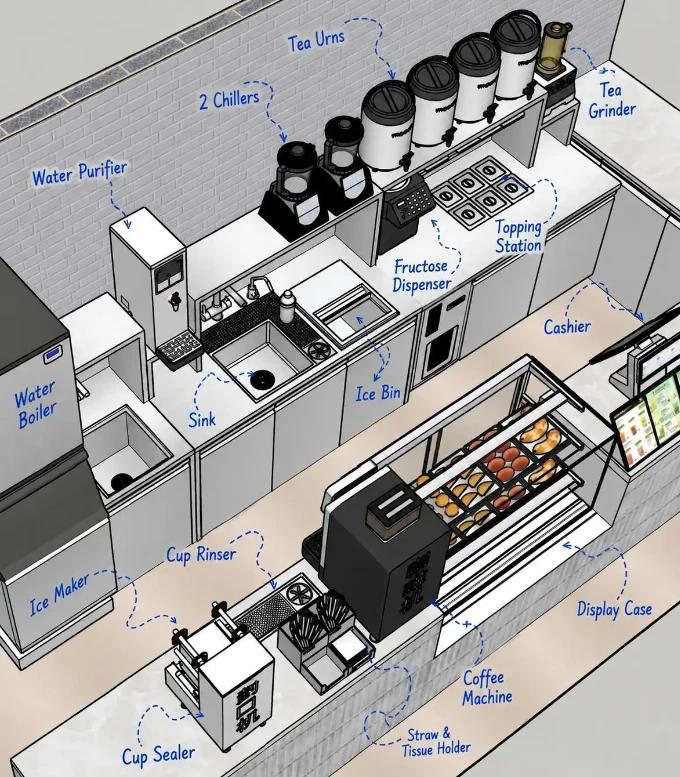
Build a menu-process-equipment matrix before requesting models. The table below organizes equipment by function; it does not mean every shop must buy every item. The final list depends on the real menu, peak demand, operating procedure, and local requirements.
| Function | Typical equipment | When it is needed | What to verify |
| Potable water and hot water | Water treatment, hot-water system, tea-brewing equipment | Any shop using potable water for drinks, tea, or ice | Water quality, flow, temperature recovery, filters, sanitation documents |
| Tea and cooked toppings | Brewers or tea extractors, pearl cooker, holding containers | When tea or cooked toppings are prepared in the shop | Batch volume, full cycle, recovery, cleanability, written procedure |
| Ice production and storage | Commercial ice maker, storage bin, scoop and scoop holder | When cold drinks are served with on-site ice | Certified harvest rate, rating conditions, storage, energy, water |
| Refrigeration and freezing | Undercounter, refrigerated worktop, upright refrigerator or freezer | For dairy, opened ingredients, purees, or frozen products | Temperature, usable volume, recovery, ambient rating, ventilation, certification |
| Measuring and mixing | Scale, measures, pumps, fructose dispenser, shakers, shaking machine | For repeatable recipe dosing and mixing | Accuracy, repeatability, effective output, cleaning, recipe compatibility |
| Blending | Commercial blender | For smoothies, foam, or other high-speed blending | Loaded cycle time, jar system, noise, cleaning, backup process |
| Sealing and handoff | Automatic or manual sealer, lids, labels, pickup counter | According to packaging method and order volume | Cup diameter, material, film, temperature, cycle time, seal pass rate |
| Handwashing and warewashing | Dedicated hand sink and utensil washing/sanitizing facilities | As required by the local food-safety authority | Location, water, drainage, backflow protection, hot water, capacity |
| Stainless steel and storage | Bar counter, worktables, sinks, shelves, cabinets | To support stations and separate clean from soiled work | Dimensions, load, corners, doors, service panels, utilities, material |
How should peak capacity be calculated without oversizing or undersizing equipment?
Equipment ratings matter only when they are connected to the real order mix. Do not select machines from average daily cups alone. The same daily sales can be concentrated into two busy hours or distributed across a full day. A busiest-15-minute measure exposes queue risk at the ice, blender, sealing, and pickup stations more clearly than a daily average.
How can the busiest 15 minutes be converted into station demand?
Step 1: Count orders in the busiest 15 minutes and split them by drink category.
Step 2: Multiply the 15-minute count by four to calculate the equivalent peak-hour order rate.
Step 3: Multiply that rate by the share of orders that use the station being evaluated.
Step 4: Compare demand with effective output measured using the real recipe, cup, and normal cleaning routine. A theoretical machine cycle is not the same as shop-level output.
Capacity formula: Peak station demand (cups/hour) = busiest 15-minute orders x 4 x share of orders using that station. Determine the final machine count after considering parallel work, replenishment, cleaning, staff proficiency, and the backup plan for downtime.
How should tea brewing, pearl cooking, and sealing capacity be evaluated?
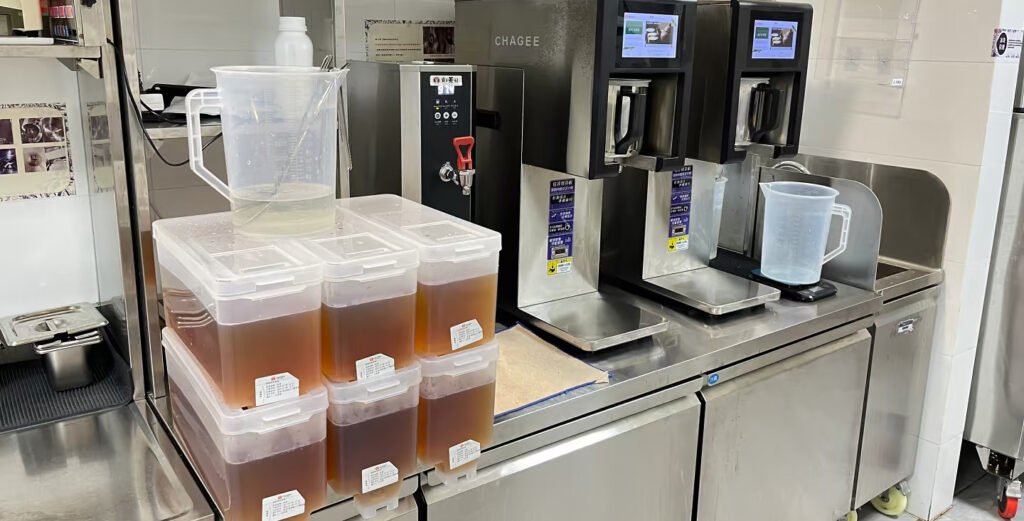
Brewing and topping preparation are batch processes. Their critical variables are usable batch size, complete cycle time, holding rule, and whether the next batch can be ready before the current batch is exhausted. Sealing is a per-cup process, so time the entire sequence: loading, alignment, sealing, removal, and rework. Run at least one simulated peak test and include replenishment, cleaning, and operator movement.
How should an ice maker and storage bin be selected?
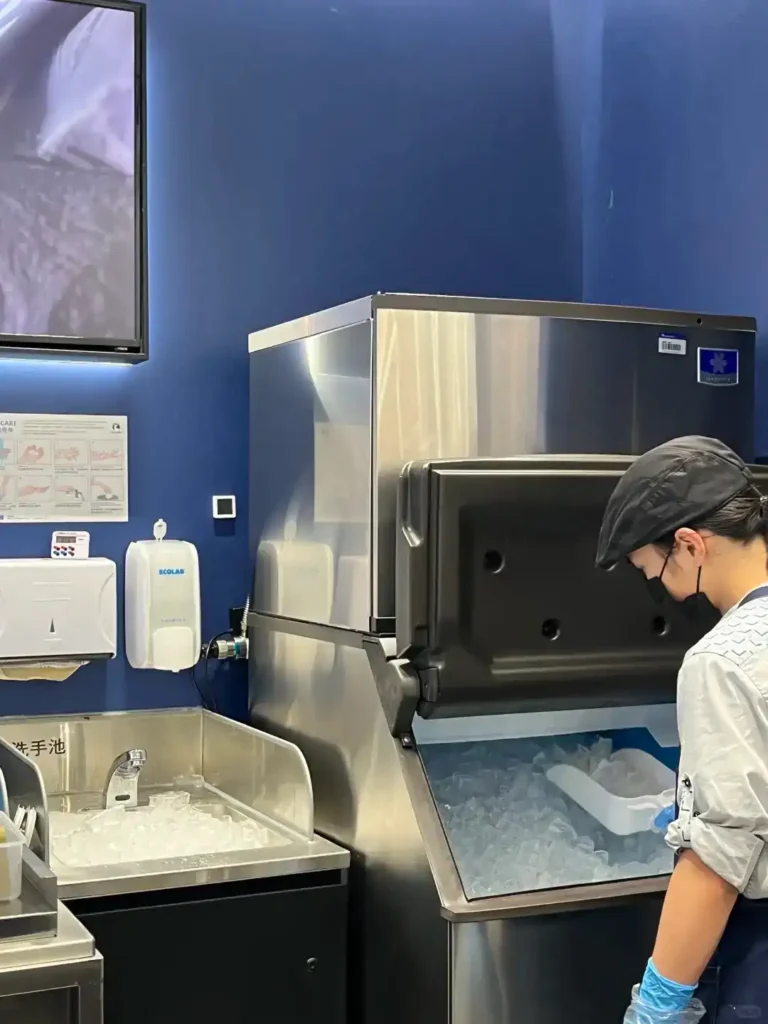
An ice system must solve two different problems: total production and short-term peak withdrawal. The ice maker replenishes inventory; the storage bin buffers the rush. A machine with adequate daily production can still fail at peak if storage is too small, while an oversized bin cannot compensate for insufficient production over the day.
How can daily ice demand be calculated from measured ice per drink?
Do not use a universal online estimate for ice per cup. Weigh the actual ice in each cup size and recipe, including light ice, standard ice, full ice, and frozen drinks. Record ice used to cool tea or support any other food process separately.
Ice formulas: Daily ice demand = sum of projected units of each drink x measured ice per drink + tea-cooling ice + other ice uses. Peak storage gap = cumulative ice withdrawn during the peak period – expected ice made during the same period.
Why is the nameplate daily ice rating not enough?
Ice output changes with inlet-water temperature, ambient temperature, condenser type, and installation airflow. AHRI’s certification program verifies fields such as ice harvest rate, energy consumption per 100 pounds of ice, potable-water use per 100 pounds, and condenser-water use where applicable. Ask which exact model, standard rating condition, and certified record support every performance claim. [4][5]
ENERGY STAR states that certified batch-type commercial ice makers are about 10% more energy efficient and 20% more water efficient than standard models. Use those figures as comparison context, not as a project utility estimate; calculate the project with the candidate model’s data, expected production, and local electricity and water rates.
How should refrigeration, freezing, and food-safety temperatures be planned?
Which ingredients belong in refrigerated or frozen storage?
Storage cannot be decided from an ingredient name alone. Follow the supplier label, after-opening instructions, processing method, and local food code. Items that commonly need special review include dairy, prepared dairy or plant-based liquids, opened purees and sauces, cooked toppings that will be held, and house-made perishable components. Freezing is needed only when the menu uses frozen ingredients, ice cream, or products that must remain frozen.
Refrigeration selection should document usable volume, container count and dimensions, temperature range, door-opening recovery, ambient class, condenser airflow, and service access. In its Version 5.0 specification memo, ENERGY STAR estimated that certified commercial refrigerators and freezers would provide average energy savings of up to 24%. A project forecast should still use the exact model data and local tariff. [7]
Which temperatures and cooling times belong in the shop SOP?
As a U.S. example, the FDA Food Code 2022 says time/temperature control for safety food held cold should be maintained at 5°C (41°F) or less. Cooked food requiring cooling should move from 57°C (135°F) to 21°C (70°F) within two hours and reach 5°C (41°F) or less within six hours total. [1] These are model-code examples; use the current requirements adopted by the project’s jurisdiction.
For tea, pearls, and house-made toppings, the person responsible for food safety should determine whether each item is time/temperature control for safety food and define batch labels, discard times, cooling containers, cooling method, and temperature records. Equipment capacity must support the written procedure; the procedure should not be weakened to accommodate inadequate refrigeration or cooling capacity.
How should a bubble tea bar workflow and dimensions be designed?
Which stations should be adjacent?
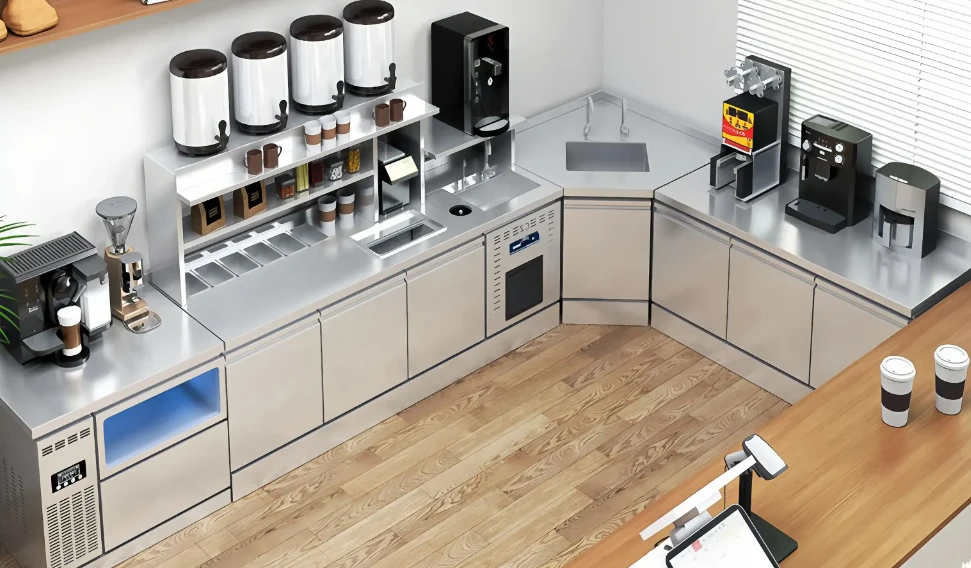
Frequent actions should require short reaches, few turns, and minimal crossing. A common sequence is cup and label, tea or base, measured ingredients, ice, blending or shaking, sealing, and handoff. Brewing, topping preparation, and warewashing can sit behind or beside the main line, but soiled tools, waste, and returns should not cross the finished-drink path. The hand sink should be convenient without being blocked by equipment, boxes, or an open door.
Use the final candidate drawings for dimensional planning. Add door and drawer swing, water and drain connections, plug and switch position, condenser intake and exhaust, filter replacement, equipment removal, and technician workspace to the body dimensions. Simply adding cabinet widths almost always understates the bar length and depth required for operation and service.
How should an accessible service counter and pickup area be considered?
Accessibility should be resolved during the floor-plan stage. Under the U.S. ADA example, a parallel approach to a service counter requires an accessible portion at least 36 inches long and no more than 36 inches high. A forward approach requires a portion at least 30 inches long and no more than 36 inches high, with compliant knee and toe clearance. [8] Other markets require review by the local building or accessibility authority.
How can electrical, water, drainage, and ventilation requirements be checked once?
Utilities must be confirmed model by model; a generic value for an equipment category is not sufficient. Share the same dated equipment schedule and plan with the architect, engineers, equipment supplier, installer, and authority having jurisdiction. Record revisions whenever a model or position changes.
| Utility or access | Data to confirm | Evidence |
| Electrical | Voltage, frequency, phase, rated power, current, plug, dedicated circuit, protective device | Nameplate, manual, electrical drawing, and local electrical review |
| Water | Potability, flow, dynamic pressure, temperature, connection, filtration, shutoff | Water report, equipment manual, filter design, and site pressure test |
| Drainage | Method, connection, slope, floor drain, indirect waste, air gap, backflow protection | Equipment drawing, plumbing plan, and local health/plumbing review |
| Heat and ventilation | Heat rejection, condenser type, airflow direction, ambient range, clearance, exhaust | Equipment drawing, ambient class, HVAC calculation, and local fire review |
| Installation and service | Delivery path, door and lift size, rigging, pullout distance, panel opening, component replacement | Packing data, shipping weight, installation manual, and site survey |
The FDA Food Code provides a U.S. model rule for backflow protection: an air gap between a water-supply inlet and a flood-level rim must be at least twice the inlet diameter and not less than 1 inch (25 mm). Whether and how that rule applies to a specific installation must be confirmed by the local health and plumbing authorities. [1]
How should equipment certifications and purchasing documents be verified?
Do not rely on a logo printed in a catalog. Search the certification body’s database by manufacturer, exact model, product category, and scope. Save the listing page or certificate with the quotation. A change in suffix, refrigerant, electrical configuration, or construction can affect whether the certification covers the model offered.
Which U.S. standards are commonly relevant to bubble tea equipment?
NSF’s food-equipment portfolio includes NSF/ANSI 7 for commercial refrigerators and freezers and NSF/ANSI 12 for automatic ice-making equipment. [3] For electrical products requiring approval, OSHA’s NRTL program identifies recognized third-party laboratories and the scope of their recognition; the purchasing team must still verify the exact model and applicable standard. [9]
Certification requirements vary by country and jurisdiction. Before ordering an export project, also confirm voltage and frequency, plug type, language, food-contact materials, refrigerant, energy labeling, import documents, and site-acceptance requirements. A blog cannot replace a decision by the local authority, certification body, or qualified design professional.
Which documents should the equipment supplier provide?
- Technical data sheet, overall dimensions, and installation drawing for the exact model.
- Electrical, water, drainage, heat rejection, ambient, and service-clearance requirements.
- Applicable certification listing or certificate matched to the quoted model.
- Operating, cleaning, maintenance, troubleshooting, and safety instructions.
- Packing dimensions, shipping weight, handling requirements, and arrival checklist.
- Recommended spare parts, consumables, warranty scope, and written exclusions.
- Factory and site acceptance criteria covering performance, appearance, accessories, documents, and corrective action.
Are a sealer, fructose dispenser, and shaking machine all necessary?
Automation earns its place through stable peak demand, not appearance. A lower-volume shop or a concept with frequent menu changes may gain flexibility from manual tools. A high-volume or multi-store operation may benefit from programmed dosing, automatic cycles, and standardized packaging when measured tests show better repeatability or less waiting.
| Equipment | When it can add value | What to verify before purchase |
| Automatic cup sealer | Continuous peak output, high share of film-sealed cups, stable cup diameter and film | Real cup and film test, complete cycle, seal pass rate, warm-up, cleaning |
| Fructose or syrup dispenser | Many recipes use repeatable doses and manual variation or training is material | Repeatability at different viscosity, range, calibration, cleaning, food-contact parts |
| Shaking machine | A large share of drinks uses a similar shaking process and hand shaking limits peak output | Effective cycle, holder compatibility, load, noise, safety interlock, cleaning, manual backup |
How can proposals be compared without looking only at purchase price?
A unit price does not capture installation, operation, or downtime risk. Compare equipment and required accessories, packing and transport, site changes, installation and commissioning, filters and cleaning materials, labor, energy, water, preventive maintenance, spare parts, and expected downtime in one model. Every number should come from a current quotation, equipment data, site test, and local tariff.
Total cost of ownership formula: TCO = equipment and required accessories + packing and transport + site modifications + installation and commissioning + planned energy and water + filters and cleaning materials + preventive maintenance and spares + expected downtime cost – expected residual value.
Do not rely on a universal price, MOQ, lead time, or warranty term when the project information is incomplete. Those terms can change with model, quantity, certification, customization, destination, and production schedule. Use PURUI’s current written quotation and contract for the specific project.
What should be accepted before opening the shop?
- Arrival inspection: packaging, shock or tilt indicators, appearance, model, serial number, accessories, and documents.
- Installation inspection: level, anchoring, airflow, water, drainage, power, grounding, backflow protection, filtration, and service space.
- Functional inspection: startup, safety interlocks, temperature, ice production, drainage, dosing, sealing, alarms, and noise.
- Recipe test: use production ingredients, cups, film, and ice for a single-cup test, a continuous peak test, and a cleaning/changeover test.
- Training handover: operation, daily and weekly cleaning, descaling, filter changes, temperature records, troubleshooting, and downtime backup.
- Document handover: final drawings, manuals, certification records, acceptance form, punch list, spares, and service contacts.
How can PURUI prepare a more accurate full-store equipment proposal?
For a coordinated package of bar counters, ice equipment, refrigerators, freezers, display cases, and stainless-steel fixtures, send the following information in one request. Better inputs make it easier to settle the equipment list, interfaces, and project boundaries before ordering.
- Destination country and city, shop type, target opening date, and known local approval requirements.
- Dimensioned floor plan, ceiling height, door and lift dimensions, and equipment delivery route.
- Complete menu, cup sizes, packaging, operating hours, daily forecast, and busiest 15-minute order mix.
- Measured ice per drink, tea batch, pearl batch, and list of ingredients requiring refrigeration or freezing.
- Site voltage, frequency, phase, available power, water quality and pressure, drainage, and ventilation conditions.
- Required certifications, material, color, cabinet construction, branding, and other customization.
- Requested responsibility for design, packing, transport, installation, commissioning, training, spares, and acceptance.
The final order package should identify exact models, quantities, dimensions, materials, functions, inclusions and exclusions, utilities, certification scope, packing, acceptance criteria, and each party’s responsibility. Price, MOQ, production schedule, warranty, and service terms should come from the current written quotation or contract.
What are the most common questions about bubble tea shop equipment?
What equipment is essential for a bubble tea shop?
Start with the systems directly required by the menu and local rules: potable-water treatment, hot water and tea brewing, topping cooking, ice production and storage, refrigeration, measuring and mixing, cup sealing or lidding, handwashing, and warewashing. Blenders, freezers, display cases, fructose dispensers, shaking machines, and automatic sealers are optional unless the menu, peak volume, service standard, or authority having jurisdiction makes them necessary.
How large should a bubble tea shop ice maker be?
Weigh the actual ice used by every recipe, multiply it by projected peak and daily sales, and add ice used for tea cooling or other tasks. Check the result against certified production at the project’s water temperature, ambient temperature, and condenser condition. Size the storage bin separately so it can cover the peak-period gap when staff remove ice faster than the machine makes it.
How long should a bubble tea shop counter be?
There is no reliable universal length. Draw every selected model at its actual width, depth, and height, including doors, drawers, ventilation clearance, connections, and service access. Then add stations for brewing, topping, ice, mixing, sealing, pickup, handwashing, and warewashing. The final layout should be reviewed for local health, plumbing, electrical, fire, building, and accessibility requirements before fabrication.
Are a cup sealer, fructose dispenser, and shaking machine always required?
No. A lower-volume shop can use manual pumps, measuring tools, shakers, and lids. Automation becomes useful when a measured peak-hour test shows that it reduces waiting, improves repeatability, or shortens training. Compare effective cups per hour, recipe range, cleaning time, packaging compatibility, calibration, and the manual backup process before buying.
Which certifications may bubble tea equipment need?
Requirements depend on the destination and local authority. U.S. projects often review NSF/ANSI 7 for commercial refrigeration, NSF/ANSI 12 for automatic ice-making equipment, and NRTL approval for applicable electrical products. Verify the exact manufacturer and model in the certification body’s database; a catalog logo or certificate for a similar model is not enough.
What information should I send PURUI for a complete quotation?
Send the destination, dimensioned floor plan, menu and cup sizes, busiest 15-minute order mix, measured ice per drink, ingredient-storage needs, voltage and frequency, water and drainage conditions, required certifications, and customization scope. PURUI can then discuss the combination of bar counters, ice, refrigeration, freezers, display cases, and stainless-steel equipment. Final scope remains subject to approved drawings, written quotation, and contract.
Explore Our Bubble Tea Shop Equipment
Where do the data and standards in this guide come from?
The sources below support the food-safety, equipment-standard, performance, efficiency, accessibility, and electrical-approval information in this guide. Recheck the latest requirements adopted by the destination and local authority before executing a project.
[1] U.S. Food and Drug Administration (FDA), Food Code 2022 and 2024 Supplement.
[2] U.S. FDA, Summary of Changes in the 2022 FDA Food Code.
[3] NSF, Food Equipment Standards, including NSF/ANSI 7 and NSF/ANSI 12.
[4] AHRI, Automatic Commercial Ice-Makers and Ice Storage Bins Certification Program.
[5] AHRI, ANSI/AHRI Standard 810-2025: Performance Rating of Automatic Commercial Ice-Makers.
[6] ENERGY STAR, Commercial Ice Makers.
[7] ENERGY STAR, Commercial Refrigerators and Freezers Version 5.0 Specification Cover Memo.
[8] U.S. Department of Justice, 2010 ADA Standards for Accessible Design, Section 904.4.
[9] U.S. Occupational Safety and Health Administration (OSHA), NRTL Program FAQs.
Contact PURUI Today
Looking for reliable commercial refrigeration equipment or customized solutions?
Whether you need standard products or small-scale OEM projects, PURUI can help you build the right refrigeration solution for your business
Products
Choose PURUI Commercial Display Refrigerators to Support Your Business Growth
Projects
Explore PURUI Completed Projects and equipment solutions
Contact Us
Contact PURUI for Project Consultation